


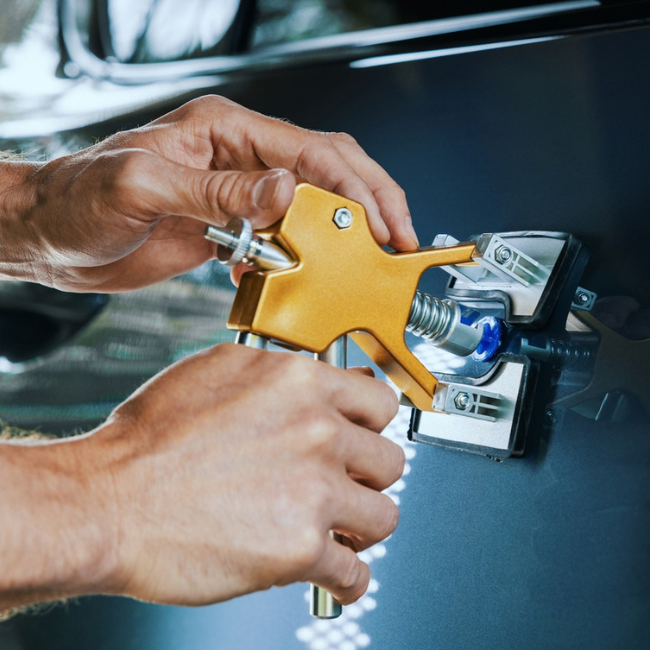
A dent does not always form as a smooth, round dip. Sometimes an impact creates a sharp line or fold in the metal, leaving what technicians call a creased dent. These dents can look more difficult to repair, which often leaves drivers wondering whether paintless dent repair, or PDR, can still work.
In many cases, PDR can repair a crease, but the answer depends on more than the size of the dent. A technician also needs to consider the depth and sharpness of the crease, the condition of the paint, where the damage sits and whether there is good access behind the panel.
Can PDR Fix A Creased Dent?
Yes, paintless dent repair can fix some creased dents without repainting the panel. PDR uses specialized tools and techniques to work the metal back toward its original shape while keeping the factory paint intact. However, a long or sharp crease can require more skill and time than a shallow round dent because the metal has folded along a more defined line.
A technician needs to inspect the full shape of the damage before deciding whether PDR fits the repair. Two creases that look similar from several feet away can respond very differently once the technician studies the depth, location and condition of the panel.
What Makes A Crease Harder To Repair Than A Regular Dent?
A round dent often spreads the impact across a wider area, while a crease concentrates the damage along a narrower line. That concentrated force can stretch the metal or create a sharper low point that takes more precise work to restore.
The technician must slowly reshape the panel without pushing too far or creating high spots around the damaged area. Repair lights can help reveal the exact shape of the dent by reflecting straight lines across the panel. When the metal bends, those lines bend too, which gives the technician a clearer view of where the panel still needs work.
This precision matters even more when the crease crosses a body line or another designed contour in the vehicle.
How Does The Depth Of A Creased Dent Affect PDR?
Depth plays a major role in whether PDR can produce a good result. A shallow crease with smooth edges can offer a better repair opportunity than a narrow dent with a deep, sharp center. Deep damage can stretch the metal more and make it harder to return the panel to its original shape.
Length alone does not determine whether the dent can receive PDR. A longer, shallow crease could work better than a much shorter dent with a sharp impact point. That is why a technician needs to look at the whole shape instead of judging the damage by one measurement.
Can PDR Work If The Paint Is Cracked?
Paintless dent repair works best when the paint remains intact. One of the main benefits of PDR is that it can restore the panel without sanding, filling or repainting the damaged area. If the impact cracked, chipped or split the paint, the vehicle could need additional paint work after the metal repair.
The condition of the paint can also give the technician clues about how much force caused the damage. A creased dent with intact paint could still qualify for PDR, while cracked paint could point toward a different repair plan. Colors On Parade technicians inspect both the metal and the finish before recommending the right approach.
Does A Dent On A Body Line Need A Different Repair?
Body lines add another level of difficulty because they form part of the vehicle’s original shape and design. A crease that crosses one of these lines changes both the flat surface around it and the contour itself, so the technician must restore several shapes at the same time.
PDR can still work on some body-line dents, but these repairs often require more precision. The technician needs to recreate the original line while keeping the surrounding panel smooth. The location, sharpness of the damage and access behind the panel all help determine whether paintless dent repair makes sense.
Why Does Access Behind The Dent Matter?
PDR technicians often use specialized tools behind the damaged panel to slowly move the metal back into place. If braces, structural parts or other components block access, the technician could need a different technique or might determine that PDR does not fit the damage.
Some repairs also allow technicians to use methods from the outside of the panel. The best approach depends on the vehicle, panel and dent. An inspection helps the technician understand what access is available before the repair begins.
Is PDR Better Than Traditional Dent Repair For A Crease?
When a crease qualifies for PDR, the method can offer several advantages. It keeps the original factory paint, avoids body filler and repainting and can often require less repair time than traditional body work. Because PDR focuses directly on reshaping the damaged metal, it can also reduce the amount of material needed for the repair.
That does not mean PDR fits every dent. Severe creases, stretched metal, cracked paint or more extensive collision damage could need traditional repair methods. The best choice depends on which process can restore the panel properly, not simply which option sounds faster.
How Can You Tell If Your Creased Dent Qualifies For PDR?
Drivers can look for a few clues, but a professional inspection gives the clearest answer. A dent with intact paint, a smooth crease and no major structural damage could have a stronger chance of qualifying. Sharp folds, torn paint or severe metal stretching can make PDR more difficult or rule it out.
Avoid trying to push the dent out from behind the panel yourself. Too much pressure in the wrong place can create high spots, stretch the metal further or damage paint that survived the original impact. An experienced technician can study the reflections, shape and tension in the panel before deciding how to approach the repair.
Get The Right Repair For Your Creased Dent
A creased dent does not automatically rule out paintless dent repair. Many creases can respond well to PDR when the paint remains intact and the depth, location and condition of the metal allow the technician to carefully restore the shape.
Colors On Parade offers paintless dent repair for qualifying minor dents and creases, with mobile service available in many areas. Our technicians inspect the damage first so they can recommend the repair method that fits your vehicle instead of forcing every dent into the same solution. Contact your local Colors On Parade team to find out whether PDR can work for your dent.
FAQs
1. Can A Long Crease Be Fixed With Paintless Dent Repair?
Sometimes. A long crease can still qualify for PDR if the metal has not stretched too far and the paint remains intact. The depth and sharpness of the crease often matter more than its length.
2. Can PDR Fix A Crease On A Car Door?
Yes, PDR can fix some creases on car doors. A technician will check the dent’s depth, paint condition, location and access behind the door panel before deciding whether PDR fits the repair.
3. Does Paintless Dent Repair Damage The Factory Paint?
PDR aims to preserve the vehicle’s existing factory finish. The technician carefully reshapes the metal without sanding or repainting when the damage and paint condition allow the process to work.