


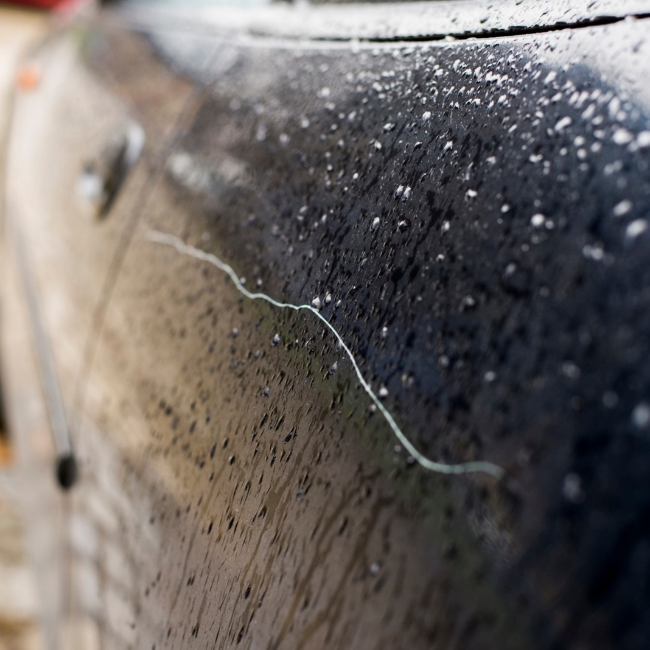
You wash your car, notice a scratch and then watch it almost disappear while the paint is wet. A few minutes later, the water dries and the scratch comes right back. If you have ever wondered why a scratch disappears when wet, the answer usually comes down to the way light moves through the damaged clear coat.
Water can temporarily fill tiny surface scratches and change the way light reflects off the paint, which makes the damage harder to see. Once the water evaporates, the uneven surface becomes visible again. That does not mean the scratch has healed, but it can give you a clue about how deep the damage might be.
Why Does A Scratch Disappear When Wet?
Most modern vehicle paint systems include a clear coat over the color layer. The clear coat gives the finish much of its shine and helps protect the paint underneath. When a light scratch cuts into that clear surface, it creates tiny edges and grooves that scatter light differently from the smooth paint around them.
Water can temporarily settle into those grooves and create a smoother surface. Light then reflects more evenly, which can make the scratch look much lighter or even seem to disappear. After the water dries, the rough edges become visible again and the scratch returns to view.
This effect most often happens with lighter damage near the surface, but the wet test alone cannot tell you exactly how deep a scratch goes. A technician still needs to inspect the area to determine which paint layers have damage.
Does A Scratch That Disappears When Wet Mean It Is Only In The Clear Coat?
A scratch that becomes much less visible when wet can suggest that the damage sits near the surface, but it does not guarantee that the scratch stays completely within the clear coat. Lighting, paint color, scratch angle and the shape of the damage can all affect what you see.
If the scratch reaches deeper into the color coat or primer, water usually cannot hide it as effectively because the damage involves more than an uneven clear surface. You could also see a different color underneath the paint or feel a stronger groove when you gently run a fingernail across the area.
The wet test can give you useful information, but it should serve as a clue rather than a diagnosis. A professional inspection can confirm whether polishing, SMART repair or another type of car scratch repair makes sense.
What Does The Fingernail Test Tell You About A Car Scratch?
The fingernail test gives you another simple clue about scratch depth. If your fingernail glides across the mark without catching, the scratch could sit mainly in the clear coat. If your nail catches in the groove, the damage could reach deeper into the finish and need more than surface polishing.
You should use this test gently because pressing hard or repeatedly rubbing the area does not help you understand the damage and could add more marks. The test also cannot tell you exactly which paint layer the scratch reached, so deeper or more noticeable damage still deserves a professional look.
Can A Clear Coat Scratch Be Polished Out?
Some light clear coat scratches can respond to professional polishing because the damage stays close to the surface. Polishing carefully levels a very small amount of the surrounding clear coat so light reflects more evenly across the area and the scratch becomes less visible.
That does not mean every scratch that disappears when wet can simply get buffed away. A deeper groove could require paint work, while aggressive polishing can remove too much clear coat and make the problem worse. The safest approach is to identify the scratch depth first, then choose a repair method that fits the actual damage.
Why Does The Scratch Look Worse On A Dry Car?
Dry paint reflects light across every small ridge, edge and groove in the damaged surface. Those changes in reflection create the bright white, gray or dull-looking line that makes many scratches stand out, especially on dark-colored vehicles.
Water temporarily changes that reflection by filling some of those uneven spaces. Once the surface dries, the light scatters across the scratch again, which makes the mark easier to see. This is also why scratches can look different depending on whether the car sits in direct sunlight, shade or artificial lighting.
Does Car Color Affect How Visible A Scratch Looks?
Yes, paint color can make the same type of scratch look very different. Black, navy blue and other dark finishes often show clear coat scratches more easily because the light-colored reflection from the damaged surface creates strong contrast against the paint.
White, silver and lighter colors can hide some surface marks better, but the damage still exists even when it is harder to see. Metallic and pearl finishes can also reflect light in complex ways, which can make a scratch change appearance as you walk around the vehicle or move it into different lighting.
Should You Try To Fix A Scratch Yourself If It Disappears When Wet?
It can be tempting to assume a nearly invisible wet scratch only needs a quick polishing product, but DIY repair can create new problems if you misjudge the damage. Rubbing compounds, sanding products and aggressive polishing can remove healthy clear coat around the scratch, while the wrong touch-up paint can leave a more noticeable mark than the original damage.
A technician can inspect the scratch first and decide whether the surface needs polishing, localized car scratch repair or a different approach. That can help protect the surrounding finish and avoid turning a small cosmetic issue into a larger repair.
Can SMART Repair Fix A Scratch That Comes Back When It Dries?
SMART repair can work well for many qualifying small to medium areas of scratch and paint damage. Small to Medium Area Repair Technology focuses on the damaged section instead of automatically refinishing a much larger area of the vehicle, which can reduce repair time, cost and disruption when the damage fits the process.
The exact repair depends on how deep the scratch goes, where it sits and how the surrounding paint looks. Many Colors On Parade locations also offer mobile service, which means qualifying cosmetic repairs can come to your home, office or another approved location.
What Should You Do When A Car Scratch Disappears When Wet?
If a scratch disappears when wet, take it as a sign that the damage could sit close to the surface, but avoid assuming that water has proven it only affects the clear coat. Look at the area under good lighting, gently check whether your fingernail catches and avoid aggressive rubbing or sanding before you know what type of repair the scratch needs.
Colors On Parade specializes in SMART cosmetic repair for qualifying scratches and other small to medium areas of vehicle damage. Our technicians can inspect the scratch, determine how deep it goes and recommend a repair that fits the finish. Contact your local Colors On Parade team if a scratch keeps disappearing when wet and returning as soon as your car dries.
FAQs
1. Why Does Water Make A Car Scratch Look Better?
Water can fill tiny grooves in a light surface scratch and change how light reflects across the paint. That smoother reflection can make the scratch look lighter or temporarily disappear until the water dries.
2. If A Scratch Disappears When Wet, Can It Be Buffed Out?
Sometimes, but the wet test alone cannot confirm that polishing will fix the damage. A light clear coat scratch can respond to polishing, while a deeper scratch can need paint repair.
3. How Can I Tell If A Car Scratch Is Too Deep To Polish?
A scratch that catches your fingernail, shows primer or exposes a different color underneath the finish could reach beyond the clear coat. A professional inspection can confirm the depth and help you choose the right repair.