


A big city is not the only place where a business opportunity can make sense. For someone researching a small market franchise, a mobile automotive business can offer a different model because it does not depend on heavy foot traffic, a large retail storefront or thousands of customers walking past a fixed location every day.
The better question is not simply how many people live in a market. A prospective owner should also look at how many vehicles are on the road, how far customers drive, how many dealerships and fleets operate nearby and whether local drivers have easy access to cosmetic automotive repair. Those factors can tell you more about the strength of a territory than population alone.
Can An Automotive Franchise Work In A Smaller Market?
Yes, an automotive franchise can work in a smaller market when the territory has enough vehicle activity, business relationships and customer demand to support the services offered. A smaller population does not automatically mean a weak opportunity, especially when a mobile business can serve customers across a wider area instead of depending on one storefront.
A mobile model can also reach several nearby towns, dealerships, businesses and residential areas from one territory. That flexibility can help an owner build a customer base across a region rather than thinking about the opportunity as a single small city or town.
Why Does Vehicle Count Matter More Than Population Alone?
Population gives you one piece of the picture, but automotive businesses depend on vehicles rather than people alone. A smaller community with a high number of registered vehicles, busy commuter routes or strong car ownership can create more demand than population numbers might suggest.
It also helps to look at how residents use their vehicles. In areas where people drive longer distances for work, travel frequently or rely heavily on personal vehicles, cosmetic damage from road debris, parking lots and everyday use can create ongoing repair needs. Those patterns can matter when evaluating a small market franchise because they show how often potential customers actually interact with their vehicles.
How Can Dealerships And Fleets Strengthen A Smaller Territory?
Business-to-business relationships can play an important role in a smaller market because one dealership, fleet operator or local business can represent multiple vehicles instead of a single repair. Dealerships regularly prepare vehicles for sale, while rental companies, delivery businesses, service fleets and other organizations often need to keep vehicles looking professional.
A mobile automotive franchise can work with these businesses on-site, which gives the owner another path to local demand beyond individual consumer appointments. Building strong relationships with a smaller number of repeat business customers can help create a different mix of opportunities than a model that depends only on one-time retail traffic.
Does A Mobile Business Need A Storefront In A Smaller Market?
A mobile business model can reduce the need for a traditional customer-facing storefront because the service travels to the customer when the repair qualifies. That can make the model appealing in markets where commercial space is limited, expensive or spread across a large geographic area.
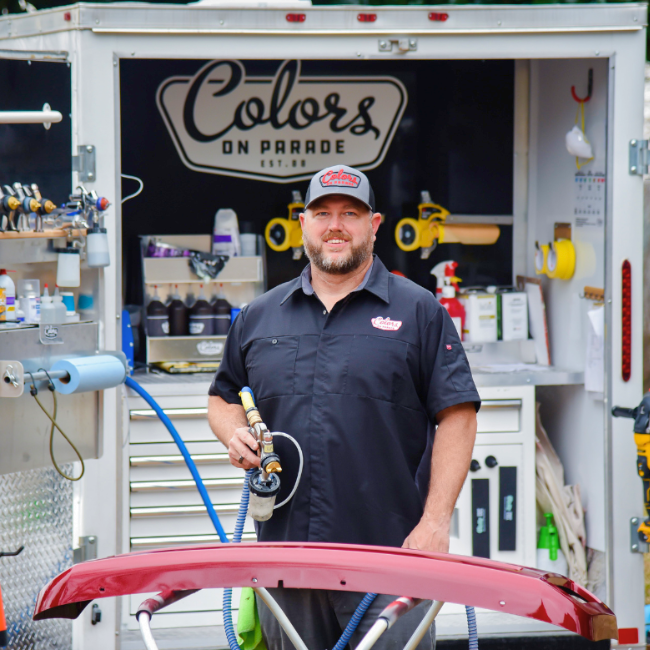
Colors On Parade franchise owners provide mobile cosmetic automotive repair services in many markets, which can allow them to meet customers at dealerships, businesses, homes or other approved locations. The exact setup, territory requirements and operating standards should always come from the franchise documents and franchise team, but the mobile structure can give owners more flexibility than a fixed-location business.
How Much Does Territory Size Matter?
Territory size matters because a smaller market could cover a wider geographic area than a dense metro territory. A prospective franchisee should look at driving distances, customer concentration, major roads and the locations of dealerships and commercial customers before deciding whether the territory feels practical.
A larger geographic territory can create more opportunities, but it can also mean more travel time between jobs. The right balance depends on how the territory is designed and how the owner plans the schedule. Prospective owners should review territory definitions carefully in the Franchise Disclosure Document and discuss questions about boundaries, availability and protected areas with the franchise team and their own legal adviser.
Can Smaller Markets Have Less Competition?
Some smaller markets can have fewer cosmetic automotive repair providers, but that does not automatically mean the territory offers an easy path to growth. Prospective owners should still study local competition, customer habits and the services that already exist in the area.
The useful question is whether local drivers and businesses have a clear need that existing providers do not fully meet. A mobile repair option can stand out when customers currently have to drive long distances, leave their vehicle at a traditional shop or wait for limited specialty services.
What Local Factors Should A Prospective Franchisee Study?
Before choosing a small market franchise, a prospective owner should look beyond basic population numbers and study how the local automotive market actually works. Important factors include the number of dealerships, fleet businesses, vehicle ownership levels, driving patterns, nearby communities and the amount of competition already serving the area.
It also helps to consider how far customers typically travel for automotive services and whether the market has seasonal changes in traffic or demand. A coastal town, college community, retirement area or regional business hub can each have very different vehicle patterns even when their populations look similar on paper.
Does A Smaller Market Mean Lower Revenue Potential?
Market size alone cannot predict revenue, and no prospective franchisee should assume that a smaller territory automatically produces lower or higher financial results. Performance can depend on many factors, including local demand, customer relationships, pricing, operating costs, owner involvement and the way the business develops over time.
Anyone considering a franchise should review the Franchise Disclosure Document carefully and speak with financial and legal professionals before making an investment decision. Prospective franchisees can also talk with existing franchise owners to learn how different territories operate and what daily business ownership looks like in real markets.
Why Can Mobility Be An Advantage In A Smaller Market?
A mobile model can help an owner serve a broader area without asking every customer to travel to one fixed location. That can matter in smaller communities where homes, businesses and dealerships sit farther apart and customers value convenience.
Mobility also lets the owner take the service directly to potential B2B partners. Instead of waiting for a dealership or fleet customer to come to a shop, the business can complete qualifying cosmetic repairs at the customer’s location, which can reduce disruption and make the service easier to fit into normal operations.
Is A Small Market Franchise Worth Exploring?
A smaller market should not be ruled out simply because it lacks the population of a major city. Vehicle activity, dealership presence, fleet demand, competition, travel patterns and nearby communities can all shape whether a territory deserves a closer look.
Colors On Parade offers a mobile automotive franchise model built around cosmetic vehicle repair and local customer relationships. If you are considering franchise ownership, speak with the Colors On Parade franchise team about available territories, training, support and the information provided in the Franchise Disclosure Document so you can decide whether the opportunity fits your goals and market.
FAQs
1. How Small Is Too Small For A Franchise Territory?
There is no single population number that makes a territory too small because demand depends on more than population. Vehicle counts, dealerships, fleets, nearby communities, competition and driving patterns can all affect the strength of a market.
2. Can A Mobile Franchise Serve More Than One Town?
A franchise territory can sometimes include several communities, depending on how the franchise defines the area. Prospective owners should review the territory information in the Franchise Disclosure Document and ask the franchise team exactly which areas an available territory covers.
3. What Should I Research Before Buying A Franchise In A Smaller Market?
Research local vehicle ownership, dealerships, fleets, competitors, travel distances and the types of automotive services already available. You should also review the Franchise Disclosure Document and speak with legal and financial professionals before making an investment decision.