


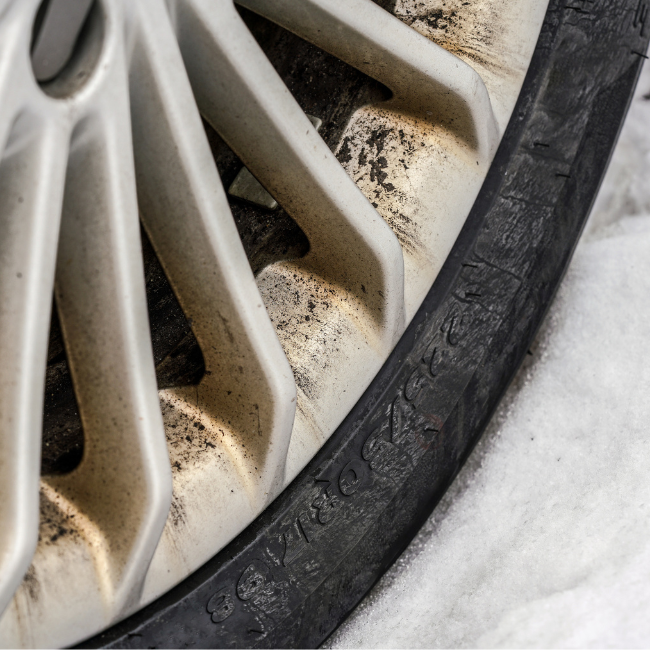
Winter might look peaceful from behind the wheel, but for your car’s alloy rims it’s one of the toughest seasons of the year. Between road salt, slush and surprise curb bumps, your wheels take a beating that can lead to corrosion, cracks and fading finishes if left unchecked.
How Road Salt Eats Away at Alloy Wheels
Road salt helps melt ice, but it’s harsh on metal. When it sticks to your wheels it starts a chemical reaction that can break down the protective coating and expose the raw alloy underneath. Once that layer is gone, moisture and oxygen work fast to cause corrosion. The longer salt sits on your rims, the faster the damage spreads.
Frequent rinsing goes a long way toward stopping this process. Even a quick rinse with warm water after a snowy drive can help remove the salty residue that clings to spokes and wheel wells.
The Hidden Threat of Slush and Ice
Winter slush might seem harmless, but it traps salt, gravel and tiny metal particles that grind against your wheels while you drive. These small abrasions dull the finish and make it easier for corrosion to set in. Once that happens, your wheels lose their shine and start to show small pitted spots that get worse over time.
Keeping your wheels clean and applying a protective wheel sealant can help create a barrier between the metal and winter grime.
Curb Rash: The Inevitable Bump of Winter
With slippery roads and snowbanks crowding parking lots, bumping a curb happens to even the best drivers. Curb rash might look minor, but each scrape removes the protective coating and exposes the bare metal. Once exposed, that area becomes a hotspot for salt corrosion.
Professional alloy Wheel Refinishing can smooth and refinish the surface before the damage spreads. Quick service keeps the wheel protected and prevents rust from forming where the coating was scraped away.
Protecting Your Investment
Your alloy wheels do more than just look good. They add performance, stability and value to your car. Protecting them through the winter is as simple as regular cleaning, avoiding deep slush when possible and addressing damage early.
At Colors On Parade, our alloy Wheel Refinishing restores your rims to like-new condition fast. We remove corrosion, fix scrapes and refinish the surface so your wheels shine again, ready to handle whatever winter throws at them.
FAQs
1. How does winter salt damage alloy wheels?
Salt clings to your wheels and breaks down their protective coating. Once the coating is gone, moisture and oxygen cause corrosion that can lead to pitting and rust.
2. What’s the best way to protect alloy wheels in winter?
Clean your wheels regularly to remove salt, slush and grime. Apply a sealant or protective wax for an added barrier. If you notice scratches or curb rash, get them repaired quickly to stop corrosion from spreading.
3. Can curb rash be repaired on alloy wheels?
Yes. Professional alloy Wheel Refinishing can smooth the surface, remove scuffs and refinish the area so it looks new again. Fast repair also prevents the exposed metal from corroding during the winter months.