


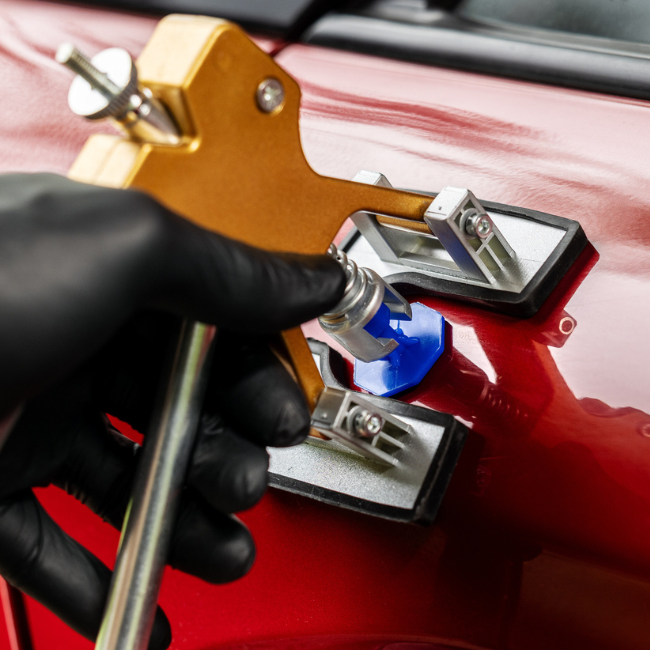
Paintless dent repair gives drivers a way to fix certain dents without repainting the vehicle. It works best when the paint still looks intact, the dent has not stretched the metal too far and a trained technician can reach the back side of the damaged area. If you have a door ding, small crease, minor parking lot dent or hail damage, paintless dent repair could help restore the panel while keeping the original finish in place. It does not work for every dent, but when the damage qualifies, it can save time, protect the factory paint and help your car look clean again without a full body shop repair.
How Does Paintless Dent Repair Work?
Paintless dent repair, often called PDR, uses special tools and careful pressure to move the dented panel back toward its original shape. Instead of sanding, filling and repainting the area, the technician works the metal from behind the panel or uses approved pulling methods from the outside when access allows. This process takes skill because the technician has to read the dent, follow the shape of the panel and make small adjustments until the surface looks smooth again.
The main goal of PDR is to repair the dent while keeping the original paint. That matters because factory paint plays a big role in how your vehicle looks and holds value. A clean PDR repair can make a dent much harder to see without changing the color, texture or finish of the panel. For many drivers, that makes it a smart first option before choosing a more involved repair.
When Does Paintless Dent Repair Work?
Paintless dent repair works best when the dent has not cracked, chipped or damaged the paint. It also works better when the dent sits on a part of the panel that a technician can reach with the right tools. Common examples include door dings, small dents from parking lots, minor creases, some hail dents and dents caused by light impacts.
The shape of the dent also matters. A shallow round dent often gives a technician more room to work than a sharp dent with deep edges. A long crease can still qualify in some cases, but the technician needs to inspect the depth, length and paint condition first. That’s why photos help, but an in-person inspection gives the clearest answer.
When Does PDR Not Work?
PDR does not work well when the paint has cracked, peeled or chipped inside the dent. It also does not work well when the metal has stretched too far, the dent sits on a sharp body line or the damaged area has had past bodywork that affects the panel. In those cases, a traditional repair could make more sense because the vehicle needs paintwork, filler or a larger repair plan.
This does not mean the damage cannot get fixed. It only means PDR might not give the best result. A trained technician can explain whether the dent qualifies for paintless dent repair or whether another SMART repair option fits better. The right answer depends on the damage, not just the size of the dent.
How Is PDR Different From Traditional Dent Repair?
Traditional dent repair usually involves sanding the damaged area, adding filler, shaping the surface and repainting the panel. That process works well for more serious damage, paint damage and dents that cannot move back cleanly with PDR. However, it often takes more time because the repair includes paint prep, color matching and curing time.
Paintless dent repair takes a more targeted approach. When the paint remains intact and the dent can get accessed properly, PDR can restore the panel without repainting. That makes it a good option for drivers who want to fix minor dents while keeping the original finish. It also fits well for busy drivers who want to avoid a long body shop visit.
What Dents Should Drivers Check After Parking Lots Or Storms?
Drivers should check the doors, quarter panels, hood, roof and trunk after tight parking situations, shopping trips or hailstorms. Parking lot dents often appear on doors and side panels, especially after another car door, cart or small impact hits the vehicle. Hail damage often shows up on flat surfaces, but it can hide until the light hits the panel from the right angle.
If you live in an area with heavy traffic, crowded shopping centers, beach parking or sudden storms, small dents can happen fast. A quick walkaround in bright light can help you spot damage early. Look from different angles because dents often show up in reflections before they stand out directly.
How Do I Know If Paintless Dent Repair Is The Right Choice?
Paintless dent repair is the right choice when the dent has intact paint, limited stretching and proper access for the technician. It works best for door dings, small dents, minor creases and some hail damage. It also makes sense when you want to protect the original finish, improve the look of the vehicle and avoid a larger repair when the damage does not need one.
Colors On Parade can inspect the dent, explain your repair options and use PDR when the damage qualifies. If the dent needs another type of SMART repair, the technician can walk you through that too. Contact Colors On Parade today to find out whether paintless dent repair can help your car look like the dent never happened.
FAQs
1. What kind of dents can paintless dent repair fix?
Paintless dent repair can fix many door dings, small dents, shallow creases and hail dents when the paint stays intact. The dent also needs proper access so a technician can work the panel back into shape. A professional inspection gives you the best answer because dent depth, location and panel shape all matter.
2. Is paintless dent repair better than traditional dent repair?
Paintless dent repair can work better than traditional dent repair when the paint has not cracked and the dent qualifies for PDR. It keeps the factory paint in place and avoids sanding, filler and repainting. SMART repair might make sense for deeper dents, damaged paint or panels that need more involved work.
3. How do I know if my dent qualifies for PDR?
Your dent might qualify for PDR if the paint looks intact, the metal has not stretched too far and the technician can reach the damaged area. Door dings, small parking lot dents and some hail dents often qualify. A technician can inspect the damage from different angles and tell you whether paintless dent repair fits your vehicle.