


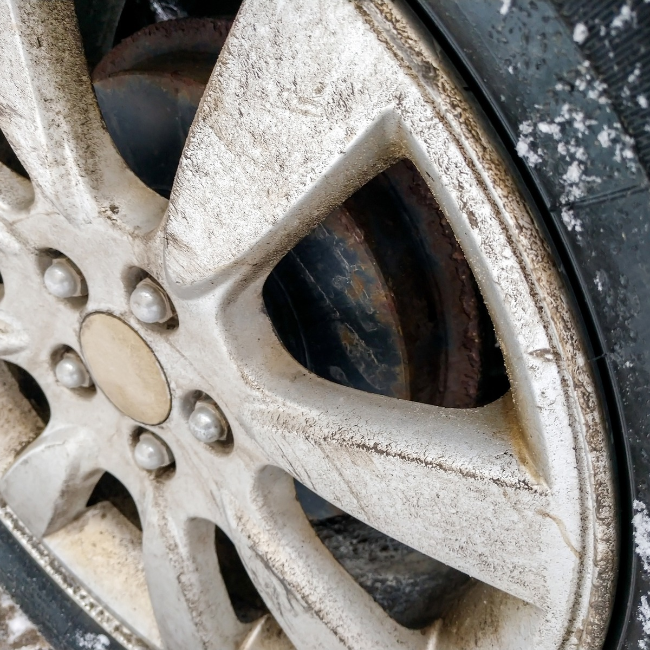
Winter roads can be rough on more than your tires. Road salt, moisture, slush, grime and repeated temperature changes can all affect the appearance of alloy wheels, especially when the protective finish already has scratches, chips or curb damage. Road salt does not automatically ruin an alloy wheel, but it can speed up corrosion when it reaches exposed metal. Over time, drivers might notice white spots, cloudy areas, peeling finish, bubbling clear coat or rough patches around damaged sections.
Many cosmetic wheel problems can still qualify for professional alloy wheel refinishing when the wheel remains structurally sound. Understanding how winter conditions affect alloy wheels can help you spot damage earlier, protect the finish and know when cleaning is no longer enough to correct the problem.
Can Road Salt Damage Alloy Wheels?
Yes, road salt can contribute to corrosion on alloy wheels when salt and moisture reach exposed aluminum beneath the protective finish. Most alloy wheels have painted, coated or clear-coated surfaces that help protect the metal underneath. When that finish remains intact, it creates an important barrier between the alloy and harsh road conditions.
Problems can start when curb rash, stone chips, scratches or peeling clear coat break that protective surface. Salt and moisture can then reach the exposed alloy and begin affecting the metal underneath. Once corrosion starts, it can spread beneath the surrounding finish, which is why a small damaged area can become more noticeable over time.
What Does Road Salt Damage Look Like On Alloy Wheels?
Road salt damage does not always look like the reddish rust people often associate with steel. Aluminum alloy wheels can develop white, chalky or cloudy areas as oxidation and corrosion affect the surface. Drivers might also notice bubbling beneath the finish, flaking clear coat or rough patches around scratches and chips.
The damage often starts in places where the protective finish has already weakened. Curb rash along the outer edge of the wheel can expose alloy, while stone chips and scratches can create smaller openings around spokes or other areas. If washing the wheel does not remove the discoloration or rough appearance, the problem could involve the finish or metal underneath rather than surface dirt.
Why Does Winter Weather Make Alloy Wheel Corrosion Worse?
Winter creates several conditions that can work together to speed up corrosion. Road salt sticks to wheels along with water, slush and grime, which can leave the surface wet and dirty for long periods. When the finish already has chips or scratches, that mixture has a much easier path to the exposed metal underneath.
Repeated freezing and thawing can also place stress on coatings that have already started to fail. Moisture can settle into damaged sections, then continue working beneath the finish as temperatures change. Drivers in areas that use road salt heavily can see these effects more often, but winter wheel damage is not limited to snowy regions. Coastal moisture, wet weather and road chemicals can also contribute to corrosion when the protective finish has damage.
Can Road Salt Cause The Clear Coat On Alloy Wheels To Peel?
Road salt is not always the only cause of peeling clear coat, but it can make the problem worse when the finish already has weak or damaged areas. A chip, scratch or scrape can break the protective coating, which allows moisture and contaminants to work underneath it. Once that happens, the clear coat can begin lifting or separating from the wheel.
Drivers might first notice a cloudy section, small bubble or rough edge before the coating begins to flake or peel. Once the finish starts separating, cleaning alone will not restore it because the damage exists beneath the surface. The affected coating usually needs proper preparation and refinishing so the new finish can bond to a clean, stable surface.
Can Curb Rash Make Winter Wheel Damage Worse?
Curb rash can make alloy wheels more vulnerable during winter because it can scrape away paint and protective coatings along the edge of the wheel. Once the finish has been removed, the exposed alloy can come into direct contact with road salt, water and grime. What begins as a visible scrape can then develop oxidation or corrosion around the damaged section.
Even a small curb scrape can create an opening for moisture, especially when the vehicle faces repeated wet or salty road conditions. That does not mean every scratched wheel will develop serious corrosion, but repairing qualifying cosmetic damage can help restore the protective surface. A technician can inspect the affected area and determine whether alloy wheel repair or refinishing fits the condition.
Can You Wash Road Salt Off Alloy Wheels?
Regular washing can help remove road salt before it sits on the wheels for long periods. Rinsing away salt, dirt and winter grime can reduce the amount of material resting against the finish, especially around spokes, wheel edges and inner surfaces where debris tends to collect. Drivers should also avoid harsh cleaners unless the product clearly states that it is safe for the specific wheel finish.
Washing works best as a preventive step, not as a repair for damage that has already formed beneath the coating. If white oxidation, bubbling, peeling clear coat or rough patches remain after cleaning, the wheel could need professional refinishing rather than another wash or stronger cleaner.
Should You Refinish Alloy Wheel Damage Before Winter?
Repairing damaged wheel finishes before harsh winter conditions can help reduce how much exposed metal comes into contact with salt and moisture. Scratches, curb rash, chips and peeling clear coat can weaken the protective barrier around the alloy, so addressing qualifying damage before winter can restore that surface before roads become covered with salt and grime.
Drivers do not always notice wheel damage before winter arrives, though. If you find corrosion, peeling or oxidation during the colder months, it is still worth having the wheel inspected. Waiting until spring might allow moisture and contaminants to continue working beneath the damaged finish, especially if the affected area keeps expanding.
Can Alloy Wheel Refinishing Fix Road Salt Damage?
Professional alloy wheel refinishing can address many types of cosmetic corrosion, oxidation and finish damage caused or worsened by winter conditions. A technician first inspects the wheel to see how deeply the damage extends and whether the problem remains mainly cosmetic. When the wheel stays structurally sound, the repair can involve removing damaged finish material, preparing the surface and applying a new finish to restore the appearance.
Severe corrosion, cracking, bending or other structural damage creates a different situation. Refinishing focuses on cosmetic surfaces, so it cannot correct every type of wheel problem. A proper inspection helps determine whether the wheel is a good candidate for refinishing or needs a different repair approach.
Is Alloy Wheel Corrosion Dangerous?
Surface corrosion often starts as an appearance issue, but drivers should not assume every corroded wheel only has cosmetic damage. A small patch beneath peeling clear coat creates a very different concern from deep corrosion, heavy pitting, cracks or damage around important areas of the wheel.
The depth and location of the damage matter as much as how the surface looks. If a wheel shows severe corrosion, bending, cracking or other significant damage, a technician should inspect it before anyone assumes refinishing will solve the problem. Professional evaluation helps separate surface finish issues from damage that needs a more extensive repair.
Does Winter Damage Mean You Need New Wheels?
Not necessarily. Peeling clear coat, oxidation, curb rash and cosmetic corrosion do not automatically mean an alloy wheel needs to be replaced. If the wheel remains structurally sound, refinishing can provide a practical option by focusing on the damaged finish instead of replacing the entire wheel.
Replacement becomes a stronger consideration when a wheel has serious structural damage, severe corrosion or another condition that makes cosmetic refinishing inappropriate. The right choice depends on the actual condition of the wheel, which is why inspection matters more than appearance alone.
Can Mobile Alloy Wheel Refinishing Come To You?
Many Colors On Parade locations offer mobile alloy wheel repair and refinishing for qualifying cosmetic damage. Depending on the repair and local service availability, a technician could complete the work at your home, workplace, dealership or another approved location. Mobile service can make cosmetic wheel repair more convenient without requiring a traditional body shop visit.
The technician still needs to inspect the wheel and determine whether the damage fits the available service. The size, depth and location of the damage all matter, along with the condition of the wheel itself. Your local Colors On Parade team can review the damage and explain which repair options are available in your area.
Protect Your Alloy Wheels From Winter Damage
Road salt, moisture and winter grime can take a toll on alloy wheels, especially when scratches, curb rash or peeling clear coat have already weakened the protective finish. Regular cleaning can help remove salt before it sits on the wheel, but existing oxidation, corrosion and peeling finish need more than soap and water.
Professional alloy wheel refinishing can restore many qualifying cosmetic problems when the wheel remains in repairable condition. If your wheels show white oxidation, bubbling finish, peeling clear coat or corrosion after winter driving, contact your local Colors On Parade team. A technician can inspect the damage and help determine whether refinishing can restore the wheel.
FAQs
1. Does Road Salt Ruin Alloy Wheels?
Road salt can contribute to corrosion when it reaches exposed alloy through scratches, chips, curb rash or damaged clear coat. Regular cleaning can help remove salt, but existing corrosion can require professional refinishing.
2. What Does Salt Corrosion Look Like On Alloy Wheels?
Salt-related corrosion can appear as white or cloudy spots, rough areas, bubbling finish or peeling clear coat. The damage can start beneath the coating, so it might remain visible even after the wheel has been cleaned.
3. Can Corroded Alloy Wheels Be Refinished?
Many wheels with cosmetic surface corrosion can qualify for refinishing if the wheel remains structurally sound. A technician needs to inspect the depth and location of the damage before recommending the right repair.